
Cellular nutrition: the science of micronutrient absorption at cellular level
Cellular nutrition explained simply
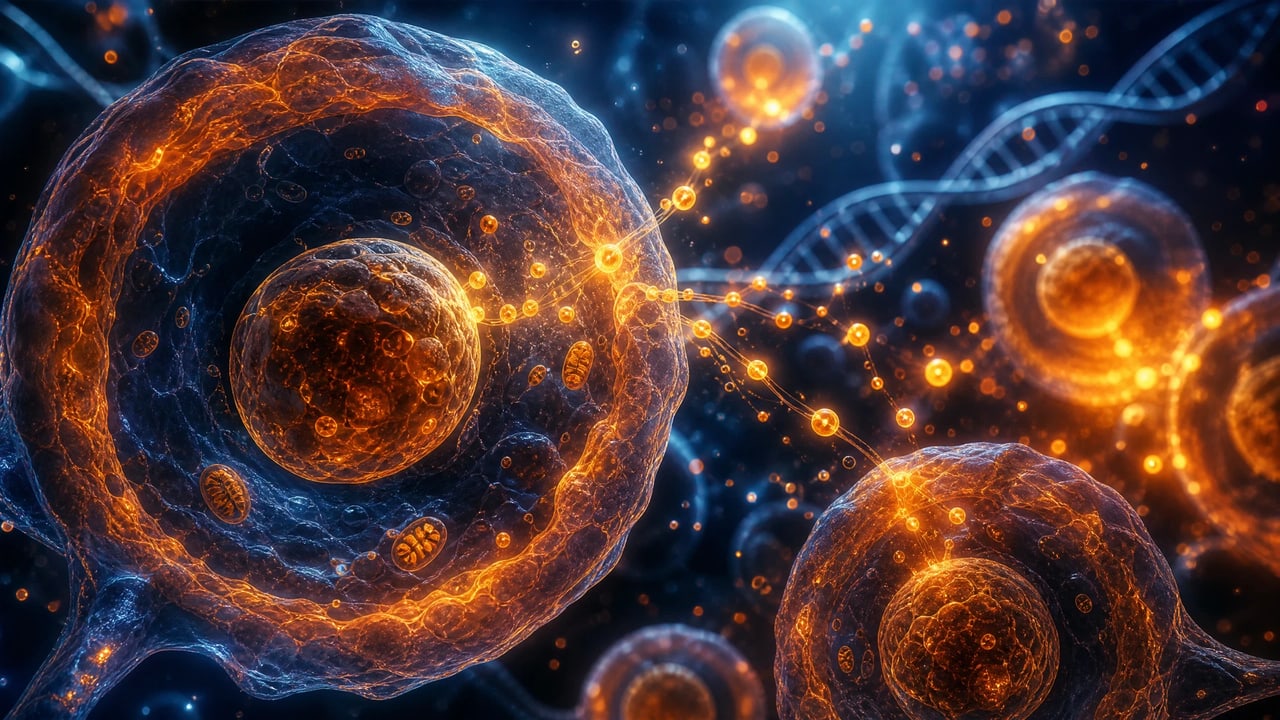
Cellular nutrition sounds complicated, but it describes a simple idea: nutrients must not merely be present on your plate—they must be digested, absorbed, transported and available for use by your cells.
For everyday life, this means that the highest number on the label is not what matters. What counts is the interaction between diet, nutrient form, digestion and regular consumption.
- Nutrients are released in the digestive system
- They enter the body through the intestinal wall
- The blood transports them to tissues and organs
- Cells absorb them through different mechanisms
A balanced diet remains the foundation. Supplements can help fill gaps, but they cannot replace a varied selection of foods.
Why bioavailability matters
Bioavailability describes the proportion of a nutrient that can actually be absorbed and used. It does not depend on a single factor.
- Nutrient form and solubility
- Composition of the entire meal
- Health of the stomach and intestines
- Interactions with other nutrients
- Individual nutritional status and requirements
A well-known example: vitamin D supports the normal absorption of calcium. Other nutrients can affect each other when taken together in very high doses. A well-considered overall formulation is therefore more important than simply taking more of an isolated nutrient.
- Fairweather-Tait et al. (2011) – Micronutrient bioavailability (https://pubmed.ncbi.nlm.nih.gov/21462112/) – Principles of absorption, nutrient form and interactions.
The journey from plate to cell
The nutrient journey can be divided into three practical stages:
- 1. Digestion and absorption: food is broken down and nutrients pass through the intestinal wall
- 2. Transport: blood and transport proteins carry nutrients to the target tissues
- 3. Cellular use: cells absorb nutrients and use them in metabolic processes
Each stage can be influenced by diet, health status and nutrient form. This is precisely why cellular nutrition is not a single “hack”, but the result of many well-functioning steps.
- Gropper & Smith (2012) – Advanced Nutrition and Human Metabolism (https://books.google.com/books/about/Advanced_Nutrition_and_Human_Metabolism.html?id=3R0Yeu79jfQC) – Bibliographic reference on nutrient transport and cellular metabolism.
Why active people should look more closely
Training increases energy expenditure and can change nutritional and recovery requirements. This does not automatically mean that every athlete needs supplements—but a monotonous or insufficient diet becomes more apparent under physical stress.
- B vitamins contribute to normal energy-yielding metabolism
- Iron is important for normal oxygen transport
- Magnesium supports normal muscle function
- Zinc and selenium contribute to normal protective functions
- Protein provides amino acids for the maintenance and growth of muscle mass
The best first step is an honest assessment: are you eating enough, with sufficient variety and in a way that matches your training volume?
- Lukaski (2004) – Vitamin and mineral status and performance (https://pubmed.ncbi.nlm.nih.gov/15212745/) – Assessment of possible performance impairments associated with an inadequate intake.
NTC® as a daily routine
FitLine describes NTC® as its proprietary Nutrient Transport Concept. For users, the practical benefit lies primarily in a clear daily structure with coordinated products:
- Basics in the morning as a micronutrient routine
- Activize for active periods, with caffeine and selected vitamins
- Restorate in the evening, with minerals
Important: the concept and its product claims come from the manufacturer. They do not automatically provide independent evidence of generally superior cellular absorption of the finished products. The ingredients, dosage, tolerance and your individual diet remain decisive.
What you can take away
Cellular nutrition does not mean taking as many products as possible. It means structuring your intake so that absorption, transport and use work together sensibly.
- Eat a varied diet and consume enough food
- Rely on regular routines rather than short-term extremes
- Assess supplements based on their specific ingredients
- Consider training, digestion and recovery together
Note: The term NTC® refers to a proprietary FitLine concept. Food supplements are not a substitute for a balanced diet or medical advice.
Share article
Share this valuable content with your network and inspire others.


